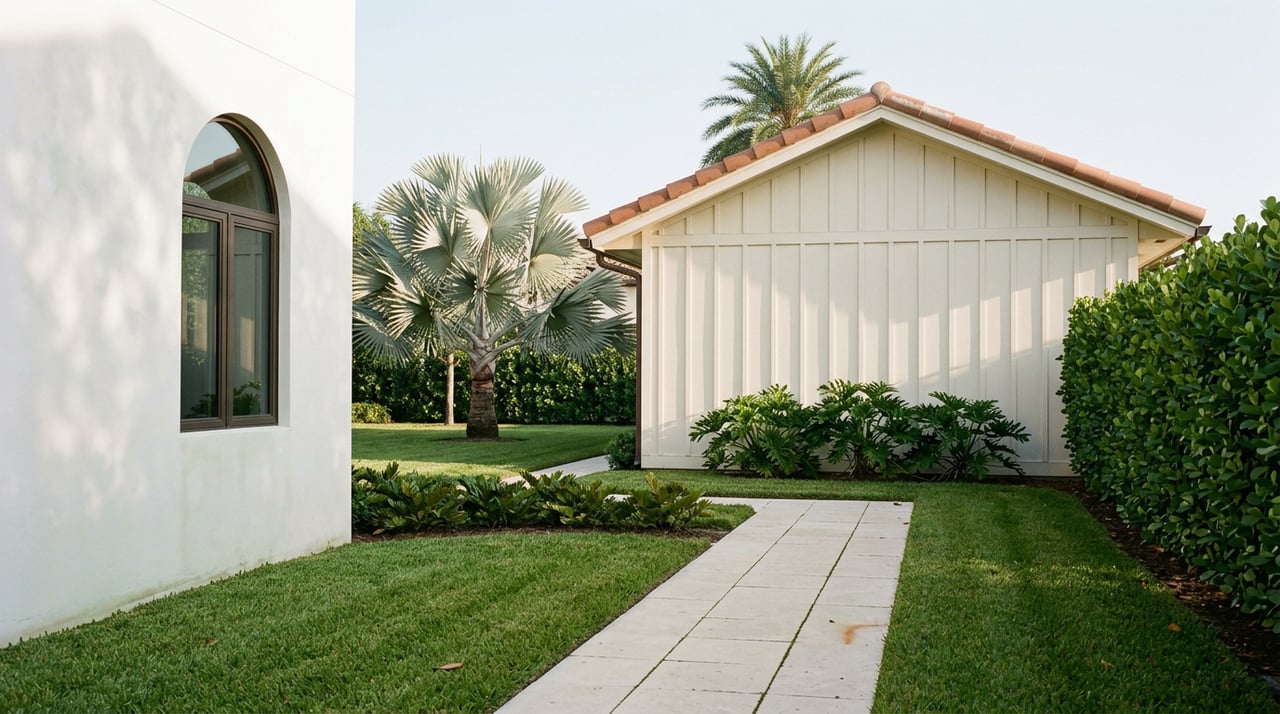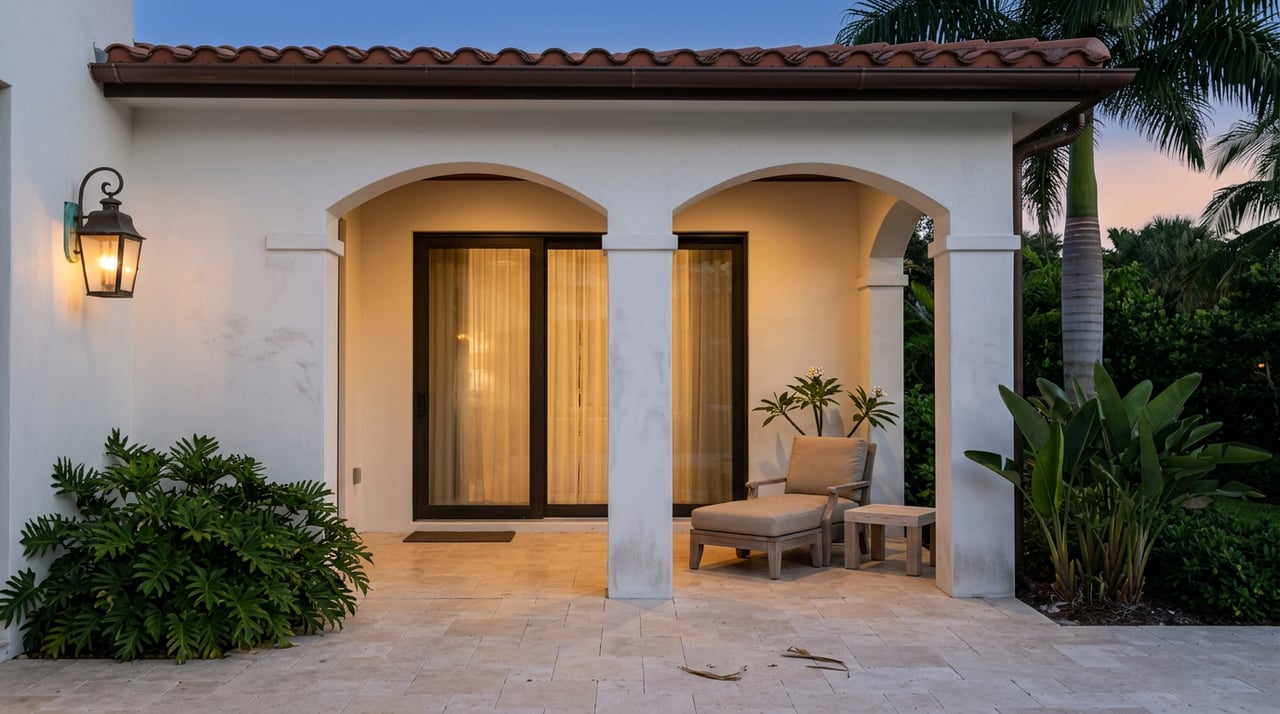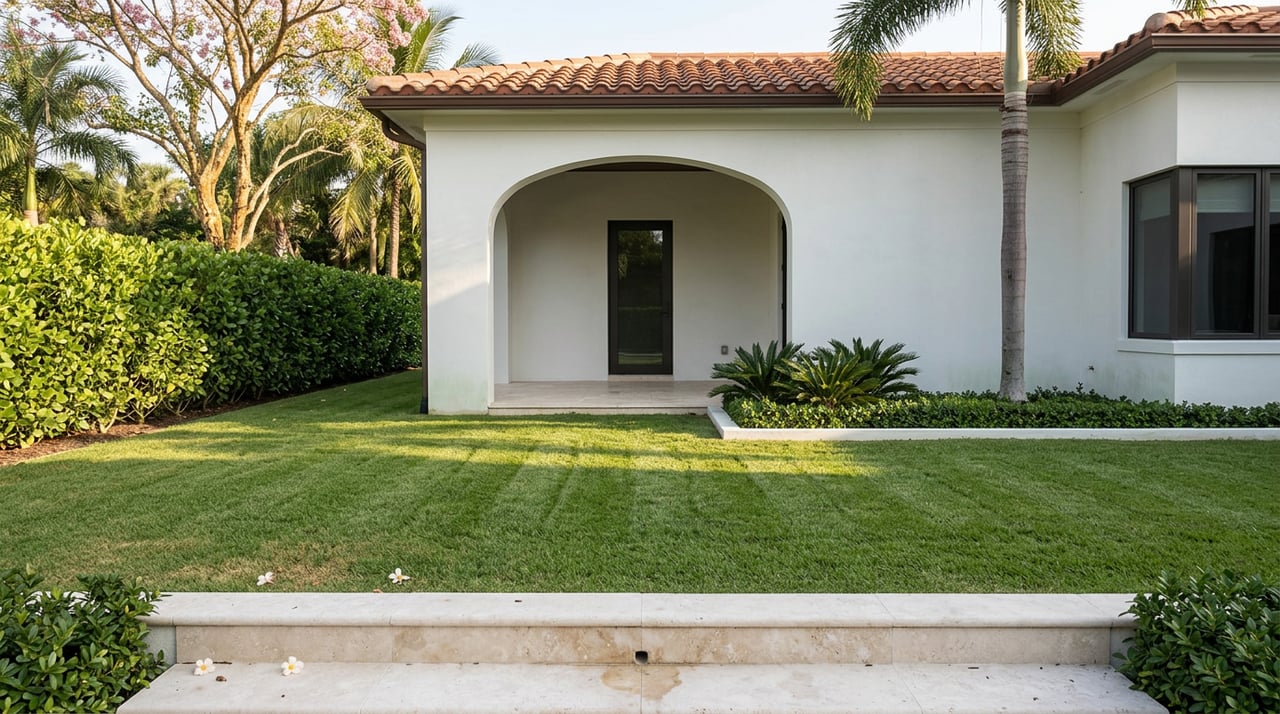
A Miami-Dade roofing contractor who pulls more than 200 permits a year tells the same story about Coral Gables twice in the past year. A tile blend that was technically code compliant got sent back by the city's Board of Architects, and each rejection added roughly a month to the job. Move that same roof one block south into Ponce Davis or High Pines, and the Board of Architects never sees it. The county reviews the permit instead, and nobody is weighing in on the tile.
That is not a charm difference between neighborhoods. It is a jurisdiction difference, and it is usually the piece buyers comparing these three places discover only after they have already written an offer or started planning a renovation.
The Line Nobody Draws on a Map
Ponce Davis and High Pines sit in unincorporated Miami-Dade County, tucked between the city of Coral Gables to the north and Pinecrest to the south. The area is commonly described as running between Kendall Drive to the north, Sunset Drive to the south, Old Cutler Road to the east, and Red Road to the west, though exact edges shift depending on which agent or map you consult.
What does not shift is the legal fact underneath the map. Coral Gables is an incorporated city with its own elected government, its own fire rescue department, and its own building department. Ponce Davis and High Pines are not incorporated anywhere. They answer directly to Miami-Dade County. The county marks this distinction with something specific: any property whose folio number begins with "30" falls under county jurisdiction. Every other prefix belongs to one of Miami-Dade's incorporated cities, each running a separate building department with its own fees, its own review queue, and in some cases its own architectural review board.
That single distinction, county versus city, is what actually separates these neighborhoods once you own property there. It shows up first on the tax bill.
What the Tax Bill Actually Says
| Area | Combined 2025-26 millage | Annual tax on $1M taxable value |
|---|---|---|
| Unincorporated Miami-Dade (Ponce Davis, High Pines) | 16.9317 mills | roughly $16,932 |
| Coral Gables | 18.1852 mills | roughly $18,185 |
The gap is 1.2535 mills, or about $1,254 a year on a $1,000,000 taxable value. Hold the property for ten years and that gap alone is worth roughly $12,535, before any change in assessed value.
The reason for the gap is not arbitrary. Coral Gables' own city millage of 5.5590 mills funds a fire rescue department the city runs itself, so fire protection is folded directly into that rate. Unincorporated residents pay a separate 2.3965 mill county fire charge stacked on top of a lower base rate of 1.9090 mills for general municipal services. Both groups are paying for the same category of service. They are just paying through different line items, and the incorporated side of that line item happens to cost more. Buyers can check the current tables directly through the Miami-Dade Property Appraiser's millage database before making assumptions based on last year's bill.
The Permit Office You Didn't Know You'd Meet
The tax gap is the part buyers usually price in. The permitting gap is the part that catches people mid-renovation.
In unincorporated Ponce Davis and High Pines, a building permit goes to Miami-Dade County's Regulatory and Economic Resources department. In Coral Gables, it goes to the city's own building department, and for many exterior projects it also goes to the Coral Gables Board of Architects, which meets twice a month. Miss the submission window by a single day and the wait for the next meeting is two weeks. If the home sits inside one of the city's historic sections, such as the Coral Gables Riviera Section, Country Club Prado, or Granada, exterior work visible from the street also needs a Certificate of Appropriateness from the Historic Preservation Board, which typically adds two to four weeks on top of standard review.
None of this makes Coral Gables permitting broken. It makes it a different process with a different owner, and that owner has opinions about materials that the county does not weigh in on. The roofing contractor's tile story is the clearest illustration: the same reroof, on the same street grid, moves through an architectural review layer on one side of Sunset Drive and skips it entirely on the other.
You can review how the county's permitting portal separates unincorporated jurisdiction from incorporated cities directly on Miami-Dade County's permitting site, which is also where the folio-prefix rule is confirmed.
Same Two Neighborhoods, Different Sidewalk
The jurisdiction split explains taxes and permits. It does not explain why High Pines and Ponce Davis, which border each other inside that same unincorporated pocket, produce such different daily experiences.
High Pines carries a Walk Score of 74. Ponce Davis carries a Walk Score of 16. Neighbors, on paper, with almost nothing in common once you step outside the front door.
The pricing tells the same story from a different angle. High Pines posted a March 2026 median sale price of $2.5125 million at $893 per square foot, with a median of 92 days on market, and recent sales spanning $2.35 million and $2.375 million up to $5.6 million. That range reflects a genuine mix of updated 1950s homes and newer construction on lots between 6,250 and 12,500 square feet. Ponce Davis, reviewed in the same May 2026 market comparison, showed asking prices from $3.5 million to $22 million, with recent closings including $8.499 million and a $23 million sale, on parcels that regularly run from under half an acre to nearly an acre or more.
For context, the broader 33143 zip code posted a March 2026 median sale price of $1.3 million with an average of 85 days on market. That figure includes condos, townhomes, and other housing stock across a much wider area, so it understates what either estate pocket actually commands. A buyer relying on a zip-code average would be off by nearly a million dollars in either direction depending on which street they end up buying on.
The mechanism here is lot format, not location. Ponce Davis trades on privacy and acreage, mostly parcels approaching or exceeding an acre with limited street presence and few sidewalks. High Pines trades on a mixed housing stock at a lower entry point in the same square mile, with more foot traffic and more variety between a classic family home and a larger new build. Buying into one does not buy you the other next door, even though both sit under the identical tax and permitting rules described above.
What This Means If You're Weighing These Three Places
The obvious comparison between Coral Gables and its unincorporated neighbors is charm versus acreage. The comparison that actually affects a closing and everything after it is paperwork.
Before writing an offer or budgeting a renovation in any of these three areas, it's worth running through a short checklist:
- Confirm the folio prefix on the specific property, not the neighborhood in general, since boundaries between incorporated and unincorporated land can be uneven block to block.
- Multiply the 1.2535 mill gap against your expected holding period to see what the tax difference actually costs over time, not just in year one.
- Ask whether the address answers to a city architectural board, a historic preservation board, or the county alone, especially if any exterior work is planned.
- Decide whether the priority is walkability at a lower entry price or acreage and seclusion at a materially higher one, because the same square mile delivers both, just not on the same street.
None of this makes one neighborhood the right answer. It makes the choice a more informed one, which is the only kind worth making on a purchase this size.
FAQ
How do I find out if a specific property is in unincorporated Miami-Dade or inside Coral Gables? Check the folio number on the Miami-Dade Property Appraiser's site. A folio beginning with "30" indicates unincorporated county jurisdiction. Any other prefix means the property sits inside one of Miami-Dade's incorporated cities, each with its own building department.
Does the homestead exemption erase the tax difference between Ponce Davis and Coral Gables? No. The exemption reduces taxable value by the same mechanism in both areas. It lowers the base the millage rate is applied to, but it does not change the rate itself, so the mill gap between unincorporated Miami-Dade and Coral Gables still applies on top of whatever taxable value remains.
Does a lower millage rate always mean a faster permit? Not necessarily, and the two are separate mechanisms. The millage difference is about who taxes the property. The permitting difference is about which building department, and in Coral Gables' case which architectural board, reviews the work. A straightforward interior renovation may move at a similar pace in either jurisdiction. Exterior work is where the gap tends to show up.
If you're comparing Ponce Davis, High Pines, or Coral Gables for a purchase, a renovation, or a build, the details above are the kind of thing worth reviewing property by property before you're under contract. Scott Shuffield and the team can walk through the folio, the millage math, and the permitting path for a specific address. Book a Consultation to get the full picture before you make an offer.