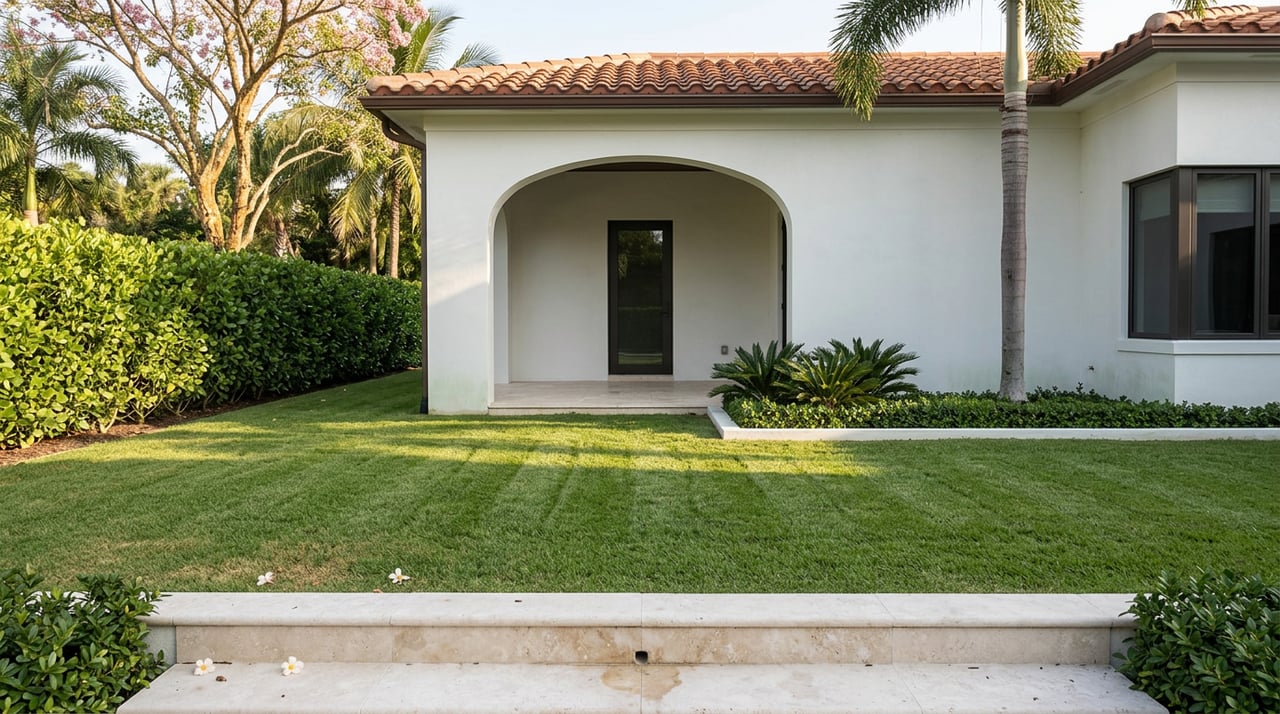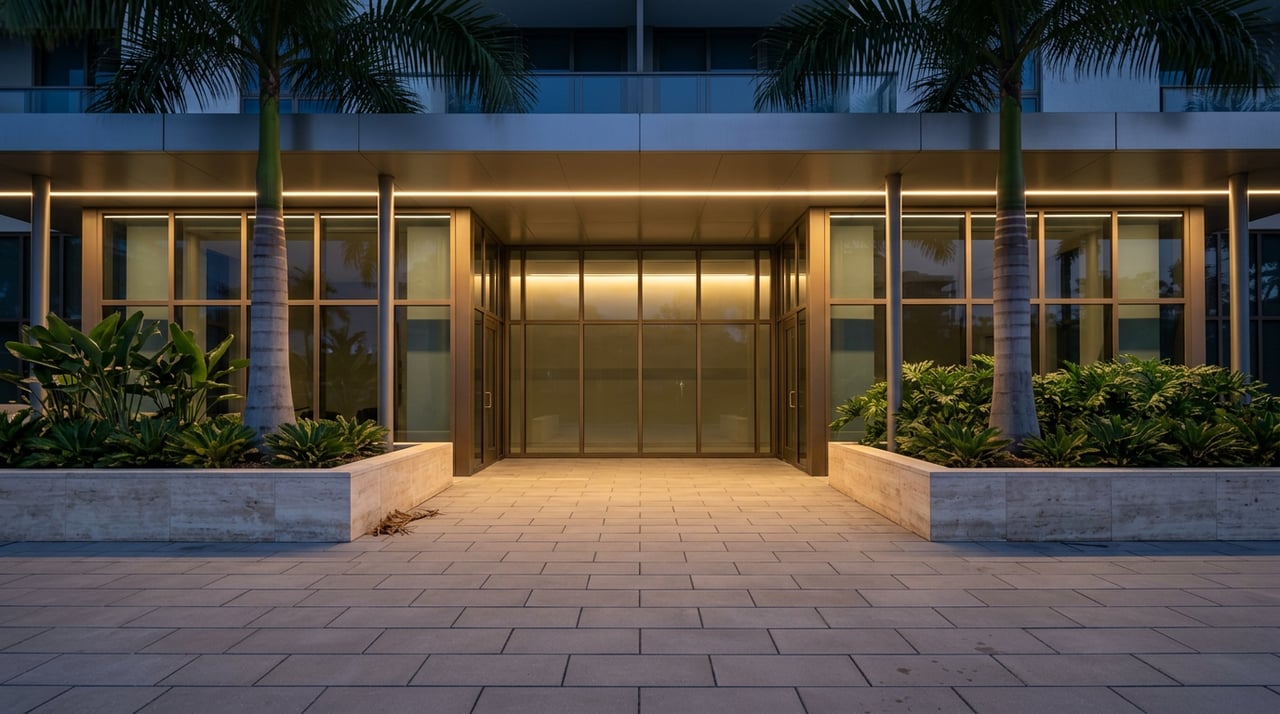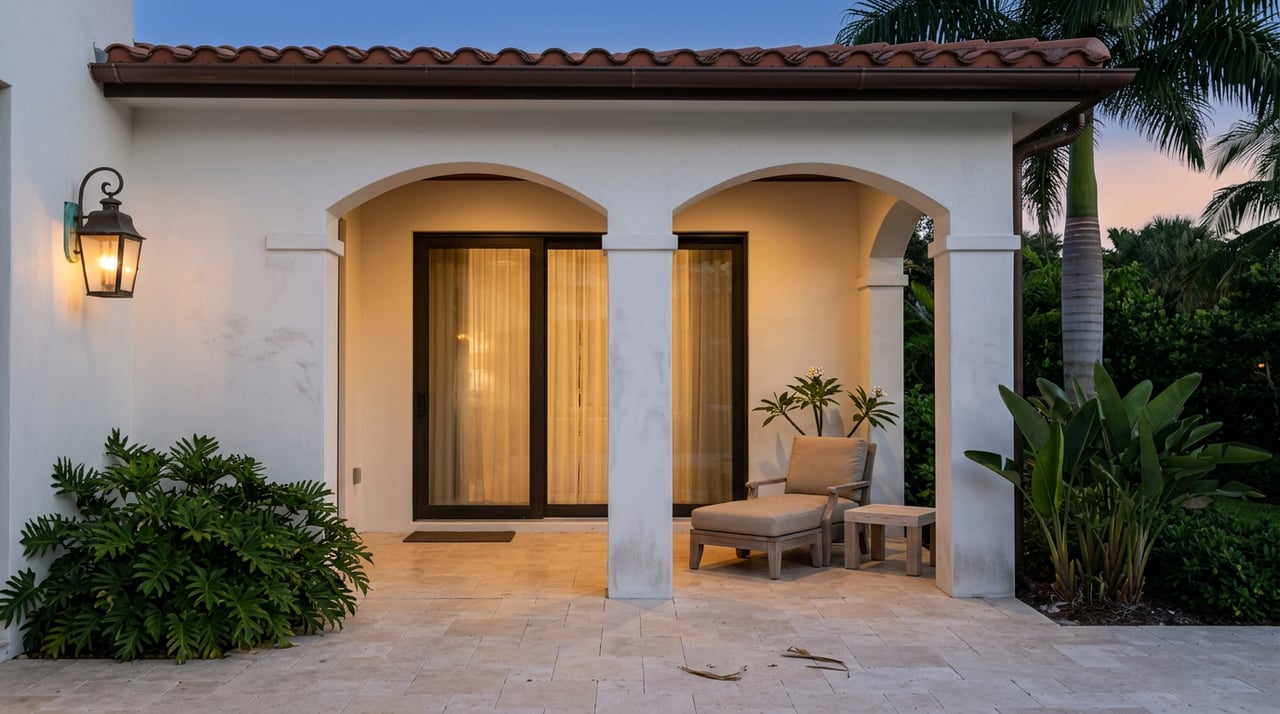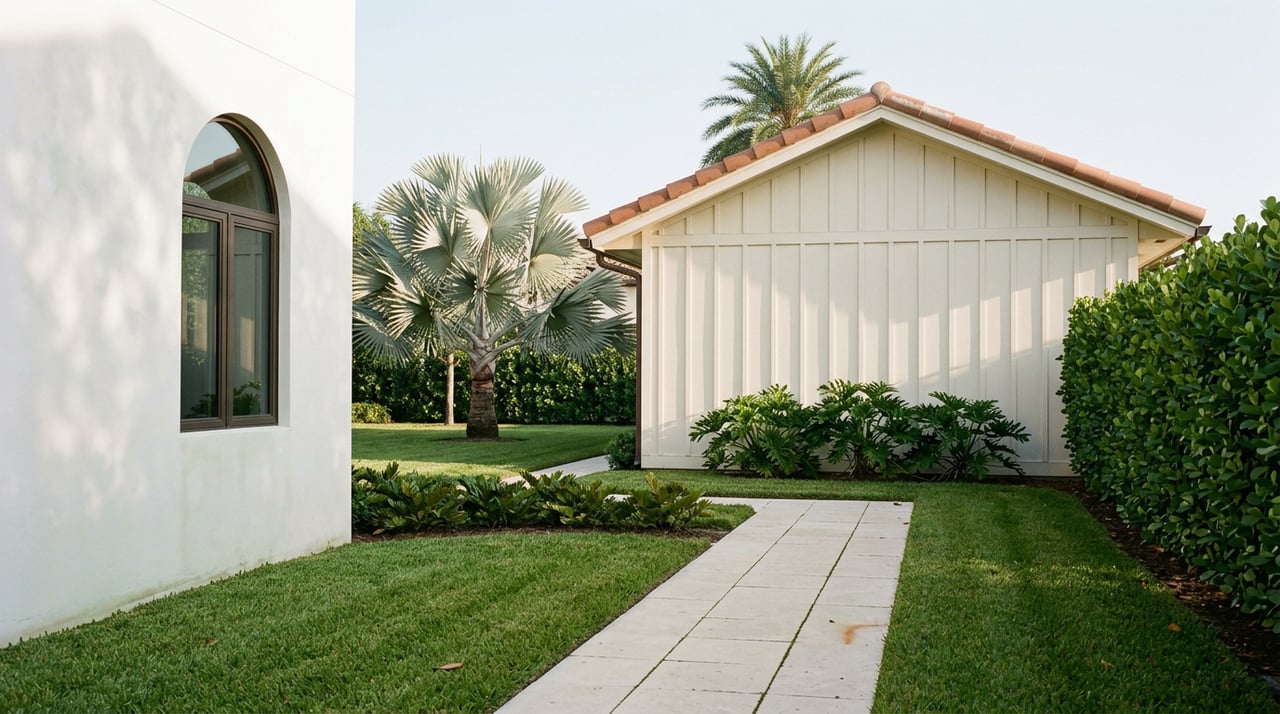
In April 2026, a seven-bedroom estate went on the market at 5545 SW 81st Terrace in Ponce Davis, priced at $22 million. It sat on a full acre, came in at 10,000 square feet, and included a heated saltwater pool, a private tennis court, and a detached guest house with its own gym. It had no water frontage. No canal, no bay glimpse, no dock. In a market where Miami luxury pricing has trained buyers to expect the premium to trace back to a view, this listing asked for a price per square foot that dwarfed even Coral Gables, and offered land instead of water.
That gap between what the property lacked and what it commanded is the whole story. Ponce Davis, a five-block enclave of unincorporated Miami-Dade tucked between Coral Gables and Pinecrest, has built a pricing structure that runs on something other than the mechanism most Miami real estate content assumes drives everything: proximity to water. If you are comparing this neighborhood to Coconut Grove's bayfront or Coral Gables' canal lots and wondering why the math doesn't line up the way the portals suggest it should, the answer is in the supply, not the shoreline.
The Math Behind One Listing
Run the numbers on 5545 SW 81st Terrace and the price per square foot lands around $2,200. For comparison, Coral Gables posted a median of $925 per square foot on single-family closings in the first quarter of 2026, with a median sold price of $2.0 million across 96 transactions. Miami-Dade County as a whole reported a median single-family sale price of $699,990 in January 2026, according to the Miami Association of Realtors.
Ponce Davis is not competing on the same axis as those numbers. The developer, SL5 Developments, built on one of only two full-acre parcels in the entire neighborhood zoned for new construction, and the other one was not move-in ready at the time this listing hit the market. That is not a soft supply constraint. That is close to a hard ceiling on what a buyer can actually purchase new in this footprint, and the price reflects a market pricing land, not location on the bay.
Why the Water Isn't the Point Here
Ponce Davis has no waterfront residential lots. It also has no municipal parks inside its boundaries. On paper, that puts it behind Coconut Grove, which pairs bayfront lots with waterfront parks and marinas, or Coral Gables, where canal access and the public Biltmore golf course round out the pitch. If you built a checklist of Miami luxury amenities and scored neighborhoods against it, Ponce Davis would lose points on two categories that typically carry real weight.
What it has instead is land itself, positioned five to ten minutes from the University of Miami's Coral Gables campus and an easy walk to the Shops at Sunset Place corridor once you cross into South Miami. Recreation runs through Dante Fascell Park just outside the neighborhood line, with its walking trail and gated playground, and through membership at the Riviera Country Club for residents who want golf without leaving the immediate area. None of that replaces a dock. It does not need to, because the buyer profile here is not shopping for waterfront. It is shopping for an acre lot inside a school zone that has not changed in a generation, a few minutes from a university and a downtown, in a neighborhood where almost nothing new gets built.
Comparing the Numbers
| Market | Period | Median Sold Price | Median $/Sq Ft |
|---|---|---|---|
| Miami-Dade County, single-family | January 2026 | $699,990 | Not reported at county level |
| Coral Gables, single-family | Q1 2026 | $2.0 million | $925 |
| 5545 SW 81st Terrace, Ponce Davis | Listed April 2026 | $22 million asking | Approximately $2,200 |
That last row is not a typical Ponce Davis transaction. It is a ceiling case, built to test what the market would pay for the rarest possible combination in the neighborhood: new construction, a full acre, and a finished, move-in-ready product. The fact that it asked for more than double the Coral Gables per-square-foot median, in a neighborhood with none of Coral Gables' civic architecture or canal access, tells you the premium is coming from somewhere other than amenities.
The Scarcity Mechanism, Not the View
The real driver here is a supply pipeline that has nearly stopped. Ponce Davis spans roughly four to five blocks between Red Road and Old Cutler Road, north of Kendall Drive and south of Sunset Drive. New construction inside that footprint is rare enough that a single full-acre new build becomes newsworthy on its own. When a developer does manage to assemble a full acre and build new, as SL5 Developments did here, it is competing against almost nothing else like it currently on the market.
Layer school-zone stability on top of that. Ponce Davis and neighboring High Pines feed into a set of controlled-choice public schools, including Sunset Elementary, Ponce de Leon Middle School, and Coral Gables Senior High, alongside private options like Epiphany Catholic School and St. Thomas Episcopal Parish School. Families who buy here are not chasing appreciation on a two-year timeline. They are buying into a school assignment and a lot size that will not change, in a neighborhood where the total number of comparable properties is small enough that turnover itself is rare. That combination, land scarcity plus zoning stability plus proximity to a university corridor, is a different kind of scarcity than a water view provides. A water view can be replicated a mile down the coast. A five-block enclave with almost no buildable inventory cannot.
What Happened After Listing Day
The market tested the thesis, and it held. Public MLS records show the listing at 5545 SW 81st Terrace moved from active to active-under-contract and then pending status well before this piece was written, months after its April debut. A $22 million ask with no waterfront, in a neighborhood most Miami buyers have never heard of, did not sit unsold. That is the strongest evidence available that the scarcity argument is not marketing language. Buyers priced in the land, the school zone, and the fact that nothing else like this parcel was coming to market anytime soon, and they moved on it.
What This Means If You're Comparing Neighborhoods
If you are cross-shopping Ponce Davis against Coral Gables or Coconut Grove using price per square foot alone, you will misread the market. A lower or higher number in isolation does not tell you what is actually being priced. In Coral Gables, part of what you are buying is canal access, golf course proximity, and a dense inventory pool with 208 active single-family listings as of the first quarter of 2026, giving buyers room to compare and negotiate. In Ponce Davis, you are buying into a pool so shallow that a single new listing can reset expectations for the entire neighborhood, because there is nothing else to compare it against.
That scarcity cuts both ways at the negotiating table. A seller in Ponce Davis has genuine leverage because replacement inventory does not exist. A buyer, on the other hand, needs an agent who understands how to build a defensible comparable set in a neighborhood where true comps are this thin, particularly when a lender's appraisal has to justify a price with almost no recent same-neighborhood, same-lot-size sales to point to. That is where the deal can stall if the valuation work is not done carefully before an offer goes in.
FAQ
Does Ponce Davis have any waterfront property? No. The neighborhood is entirely landlocked, with no canal or bay frontage on any residential parcel.
Why doesn't Ponce Davis have a municipal park? It sits in unincorporated Miami-Dade County rather than inside Coral Gables or South Miami city limits, so it does not have its own dedicated park system. Residents typically use Dante Fascell Park just outside the neighborhood boundary.
How often does new construction come up in Ponce Davis? Rarely. As of the spring 2026 listing cycle, only two full-acre parcels in the entire neighborhood had new construction built on them, and one of those was not yet finished.
If you are trying to figure out what a specific lot, home, or listing in Ponce Davis, High Pines, or Coral Gables is actually worth once you account for scarcity, school zoning, and the supply pipeline behind it, that is the kind of analysis Scott Shuffield does before a number ever goes on a sign. Book a consultation and we will walk through the comparable set with you, line by line.