Wondering what “gated” really means in Coral Gables? It is a smart question, because these neighborhoods are not all built the same. If you are looking for more privacy, controlled access, waterfront options, or a more tailored residential setting, this guide will help you understand how Coral Gables gated streets and enclaves actually work before you buy. Let’s dive in.
What Counts as Gated in Coral Gables
In Coral Gables, gated living is not one single model. Some neighborhoods have guard-gated entrances, some operate through special taxing districts with resident decals and access devices, and others are governed by an HOA, a club structure, or a mix of all three.
That matters because your ownership experience can vary from one enclave to the next. Two neighborhoods may both look private from the outside, but the way they handle entry, maintenance, approvals, and fees can be very different.
How Access Usually Works
If you buy in one of Coral Gables’ gate-controlled districts, access often depends on resident applications and proof of residency. The city’s special district system shows that decals or gate devices may be issued only after that process is completed.
Guest access and vendor access are also part of the equation. In many enclaves, you should expect more formal procedures than you would on a typical non-gated Coral Gables street.
Guard-Gated Communities
Some communities use a full guardhouse model. For example, Islands of Cocoplum states that it has a guard house with 24-hour surveillance and on-duty officers, and Hammock Oaks has formal guardhouse operating protocols referenced in city records.
For you as a buyer, this can mean a stronger sense of controlled entry and a more structured arrival experience. It can also mean more rules, more documentation, and more coordination for guests or service providers.
District-Gated Streets
Other areas are tied to special taxing districts rather than a traditional single-subdivision HOA setup. The city’s district inventory includes enclaves such as Cocoplum Phase I, Hammock Lakes, Hammock Oaks Harbor, Kings Bay, Old Cutler Bay, Pine Bay Estates, Snapper Creek Lakes, and Sunrise Harbour.
In these cases, the gate may be just one part of a broader district structure. Security, lighting, and upkeep may be funded through district assessments rather than only through a homeowners association.
HOA or Club Rules
Some enclaves layer HOA or club oversight on top of gated access. That can affect exterior changes, landscaping, amenity use, marina terms, and day-to-day logistics.
For example, Islands of Cocoplum notes approval requirements for exterior paint, major renovations, and landscape changes. Snapper Creek Lakes Club also references governing documents such as bylaws, protective covenants, and marina terms.
Why Governance Matters to Buyers
The gate is only part of what you are buying. Just as important is who controls the roads, lights, landscaping, common areas, and approval process.
City materials tied to Cocoplum show that responsibility can shift among the city, a special taxing district, and an HOA. That means you should not assume the same party handles every part of the neighborhood experience.
Questions to Ask Early
Before you get too far into a purchase, ask for clarity on:
- Whether the community is HOA-governed, district-governed, club-governed, or a combination
- What fees or assessments cover
- How resident decals or access devices are issued
- How guest and vendor entry is handled
- Whether roads and lighting are public, district-maintained, or association-controlled
- What approvals are required for renovations, landscaping, docks, or exterior finishes
These details shape both your monthly carrying costs and your daily convenience. In Coral Gables gated enclaves, paperwork and policies are often part of the value proposition.
Major Enclave Types in South Coral Gables
South Coral Gables includes several low-density, access-controlled pockets rather than one large gated master community. That variety is one reason buyers are drawn to the area.
Some enclaves lean more toward marina access and club structure. Others focus on canal frontage, estate lots, or a more formal security setup.
Cocoplum and Islands of Cocoplum
Islands of Cocoplum describes 302 unique estates, including 172 waterfront residences, along with a private marina and guard house. Its HOA structure also includes resident IDs for amenities and approval requirements for certain exterior changes.
If you are looking for an amenity- and security-driven setting, this is one of the clearest examples in Coral Gables. It combines estate-style homes, water orientation, and a highly managed ownership environment.
Snapper Creek Lakes
Snapper Creek Lakes Club describes itself as a secured, gated community with a private marina. Its materials say the neighborhood has 124 lots, including 30 lakefront lots and six homes with direct Biscayne Bay access.
This type of enclave may appeal to buyers who want a lower-density feel with club and marina elements. As always, the important next step is understanding the governing documents and marina-related rules before closing.
Gables by the Sea
Gables by the Sea is described as a gated waterfront enclave with private boat docks and gated streets. Community materials reference around 520 homes and deep-water canals with direct Biscayne Bay access and no bridges.
For buyers focused on boating access, canal frontage, and dock potential, this enclave stands out for its waterfront orientation. The practical questions here often center on dock setup, water access, and neighborhood-specific rules.
Other Security Districts
The city’s district inventory also points to estate-style pockets such as Hammock Lakes, Hammock Oaks Harbor, Kings Bay, Old Cutler Bay, Pine Bay Estates, and Sunrise Harbour. These reinforce that gated Coral Gables is a collection of distinct enclaves, not a single lifestyle category.
That is good news if you want options. It also means careful comparison is essential, because privacy, access control, waterfront features, and governance can vary widely.
Lot Patterns and Waterfront Appeal
When buyers compare Coral Gables gated enclaves, lot size is only one part of the story. The bigger question is often how the lot relates to water, setbacks, privacy, and traffic flow.
Many of these neighborhoods pair estate homes with canal frontage, lake frontage, bay access, oversized setbacks, or fewer cut-through streets. That combination is a major reason they attract move-up and luxury buyers.
What to Look For
As you evaluate homes, focus on practical differences such as:
- Canal-front versus lakefront placement
- Direct bay access versus indirect water access
- Presence of a private marina
- Dock or boat-related restrictions
- Privacy created by lot layout and fewer through streets
- How much of the streetscape is shaped by common-area landscaping and setback patterns
These features can affect not just lifestyle, but also long-term satisfaction with the property. A large lot and a waterfront lot can offer very different ownership experiences.
Architecture and the Coral Gables Look
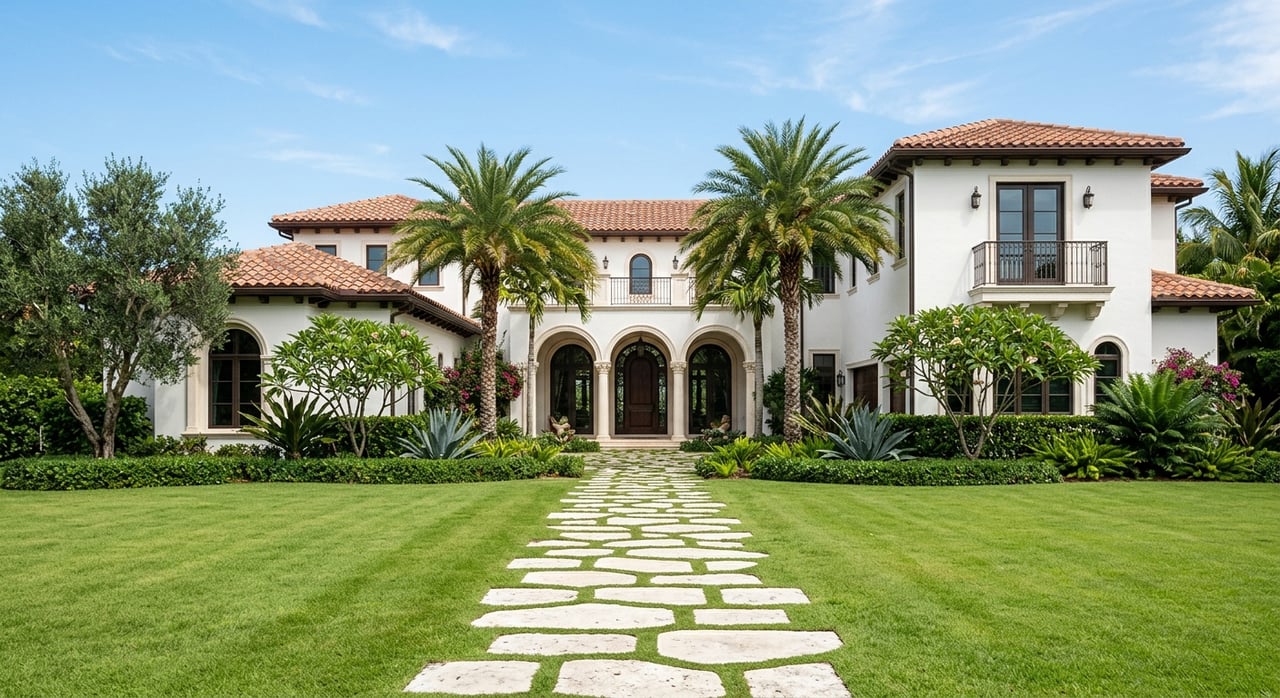
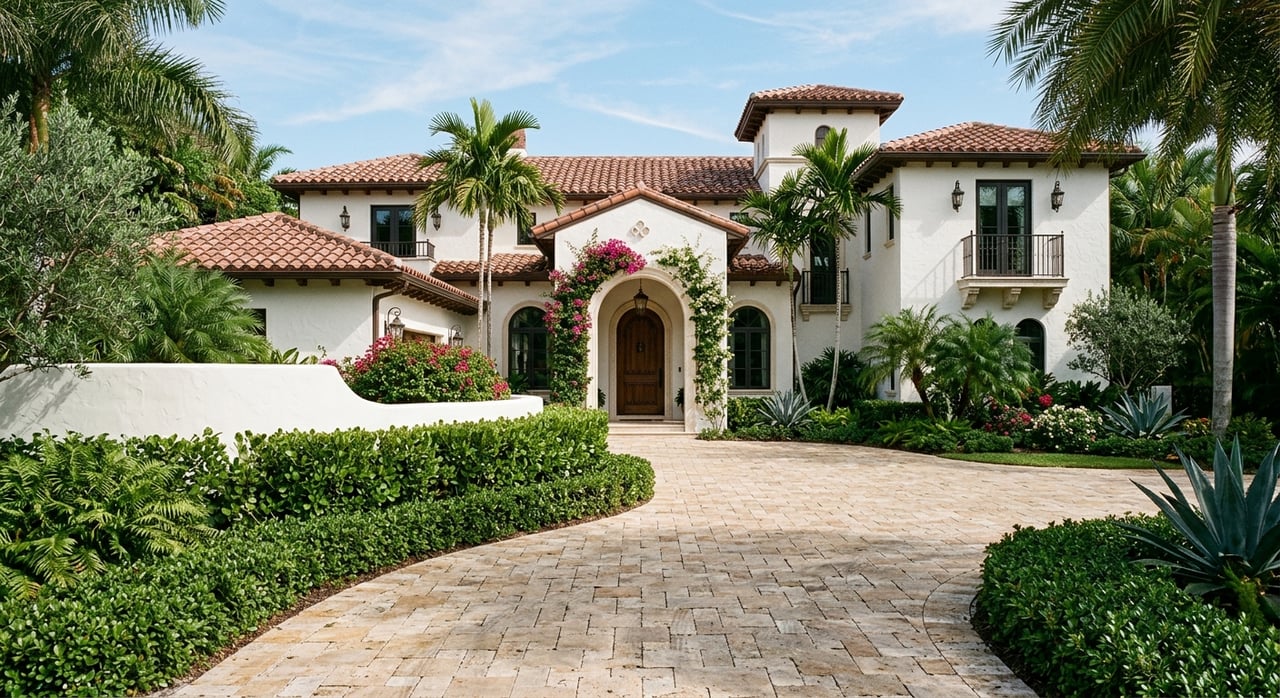
One reason Coral Gables feels visually consistent, even across newer luxury homes, is the city’s continuing emphasis on Mediterranean design. The zoning code defines Coral Gables Mediterranean Architecture as part of George Merrick’s vision, and the city uses a Med Bonus framework to keep new development visually linked to the city’s established fabric.
For you as a buyer, that often means newer custom estates still echo the city’s traditional look. You are more likely to see Mediterranean, Spanish Revival, and other Merrick-compatible design language than a generic suburban tract-home style.
Design Cues You May See
The city’s historical landmarks materials highlight features that help define this character, including:
- Coral-rock construction
- Barrel tile roofs
- Towers and arched details
- Decorative window and door surrounds
- Exposed rafter tails
- A Spanish hill-town influence in landmark entrances and streetscapes
That architectural consistency can be a real draw if you want a home that feels rooted in Coral Gables rather than disconnected from it. It also means exterior changes in some enclaves may be reviewed closely.
Lifestyle Tradeoffs to Understand
The appeal of a gated enclave is easy to see. Buyers are often drawn to less through traffic, more privacy, more control over entry, and in some cases marina access, private docks, or shared amenities.
But those benefits usually come with tradeoffs. The most common are higher ongoing costs and more detailed rules.
The Upside
Depending on the enclave, you may gain:
- A quieter residential setting
- Controlled entry
- Common-area maintenance
- Structured security programs
- Waterfront or marina features
- A more consistent neighborhood presentation
For many buyers, that package is exactly the point. It offers a more managed environment than a standard city street.
The Tradeoffs
You should also expect possible costs and restrictions tied to:
- HOA fees
- Special district assessments
- Lighting and road maintenance obligations
- Common-area upkeep
- Exterior approval rules
- Construction logistics
- Noise, signage, boat, or trailer rules
In other words, these neighborhoods can offer more control, but they also ask more of owners. The right fit depends on whether you value privacy, order, and waterfront access more than maximum flexibility.
Your Due Diligence Checklist
Before you buy in a Coral Gables gated street or enclave, confirm the details in writing. A careful review up front can help you avoid surprises after closing.
Use this checklist as a starting point:
- Identify the governing structure for the community
- Review all current fees, dues, and assessments
- Confirm what those charges actually cover
- Ask how resident access devices and decals are issued
- Understand guest and vendor entry procedures
- Verify whether roads, lighting, and common areas are public or privately managed
- Review approval requirements for exterior work and landscaping
- Check any rules related to docks, marinas, boats, trailers, signage, or construction timing
A gated entrance can look simple from the outside. In practice, the ownership structure behind that entrance is what defines your experience.
Who These Enclaves Fit Best
Coral Gables gated enclaves tend to make the most sense if you value privacy, traffic control, architectural consistency, and water access. They may be especially appealing if you are looking for an estate setting with a more curated feel.
They are usually less ideal if your top priority is the lowest possible carrying cost or the most casual, unrestricted street access. The right choice depends on how you weigh convenience, lifestyle, and governance.
If you want help comparing these neighborhoods side by side, working with a local advisor can make the process much clearer. Scott Shuffield can help you evaluate Coral Gables enclaves with a practical eye on access, property fit, and long-term value.
FAQs
What is the difference between a gated district and a gated HOA community in Coral Gables?
- A gated district may operate through a special taxing district with resident decals or access devices, while a gated HOA community may also include association rules, dues, and approval processes for property changes.
Which Coral Gables gated enclaves offer waterfront or marina features?
- Community materials cited in this guide show waterfront or marina features in places such as Islands of Cocoplum, Snapper Creek Lakes, and Gables by the Sea, though the exact water access and rules vary by enclave.
What fees should you expect in a Coral Gables gated enclave?
- Depending on the neighborhood, you may see HOA fees, special district assessments, or both, and those costs may fund security, landscaping, lighting, common areas, maintenance, or marina-related services.
What rules should buyers review before purchasing in a Coral Gables gated community?
- You should review rules tied to resident access, guest entry, exterior paint, landscaping, renovations, construction logistics, boats, trailers, noise, signage, and any marina or dock use.
Why do Coral Gables gated neighborhoods often have a similar architectural feel?
- The city continues to emphasize Coral Gables Mediterranean Architecture through its zoning framework, which helps keep newer development visually linked to the city’s established historic character.