Pricing a luxury home in Coral Gables is not about picking a number that feels aspirational or copying an automated estimate. In a market where buyer choice is meaningful and negotiation room is common, your first price can shape how quickly your home gets attention and how strong your final outcome will be. If you are planning to sell in the next 6 to 12 months, you need a pricing strategy built on local data, micro-location, and property-specific details. Let’s dive in.
Why luxury pricing is different in Coral Gables
Coral Gables sits in one of Miami-Dade County’s most established high-end housing markets. According to MIAMI Realtors, the county’s luxury single-family threshold, defined as the top 5% of sales, rose from $3.3 million in 2024 to $3.5 million in 2025, while the ultra-luxury threshold rose from $10 million to $10.7 million. The same report noted that Coral Gables recorded 22 sales of $10 million or more in 2025.
That matters because luxury buyers in Coral Gables are usually comparing your home against a narrow, highly specific set of options. They are not looking at your property the same way a broad mass-market buyer would. They tend to weigh location, design, lot value, condition, and long-term flexibility very carefully.
Start with Coral Gables market data
A smart pricing strategy begins with the local numbers, but it should not stop there. In Q4 2025 Coral Gables single-family metrics, the city posted 95 closed sales, a median sale price of $2.05 million, an average sale price of $4.04 million, 164 active listings, 5.4 months of supply, 93 median days to contract, and 90.4% of original list price received.
Those numbers tell you two important things. First, the average sale price is much higher than the median, which means a small number of very high-end sales can skew the average. Second, homes are not flying off the shelf, so sellers who overreach on pricing may face longer market times and larger reductions.
The newest city-level table visible in search results also showed Coral Gables at about 24 closed sales and a $2.0 million median sale price in January 2026, reinforcing the idea that pricing needs to reflect current conditions, not last year’s peak expectations.
Do not rely on automated estimates
Luxury pricing in Coral Gables is a comp exercise, not a Zestimate exercise. Public data sources can vary widely, and that alone is a warning sign for sellers.
For example, one public portal reported a February 2026 Coral Gables median sale price of $1.52 million and 113 median days on market, while Realtor.com’s Coral Gables market page showed a $1.989 million median home price, 71 median days on market, and homes selling for 5.09% below asking on average. When the numbers vary that much, you can see why a single automated estimate should never be the anchor for a luxury listing.
Focus on true comparable sales
The best pricing approach starts with comparable properties that match your home as closely as possible. In Coral Gables, that means more than matching bedroom count and square footage.
You need to compare homes by:
- Micro-location within Coral Gables
- Waterfront or canal frontage
- Lot size and configuration
- Architectural style and condition
- Historic status or preservation constraints
- Renovation level and finish quality
- Privacy, outdoor space, and parking
- Redevelopment potential based on zoning
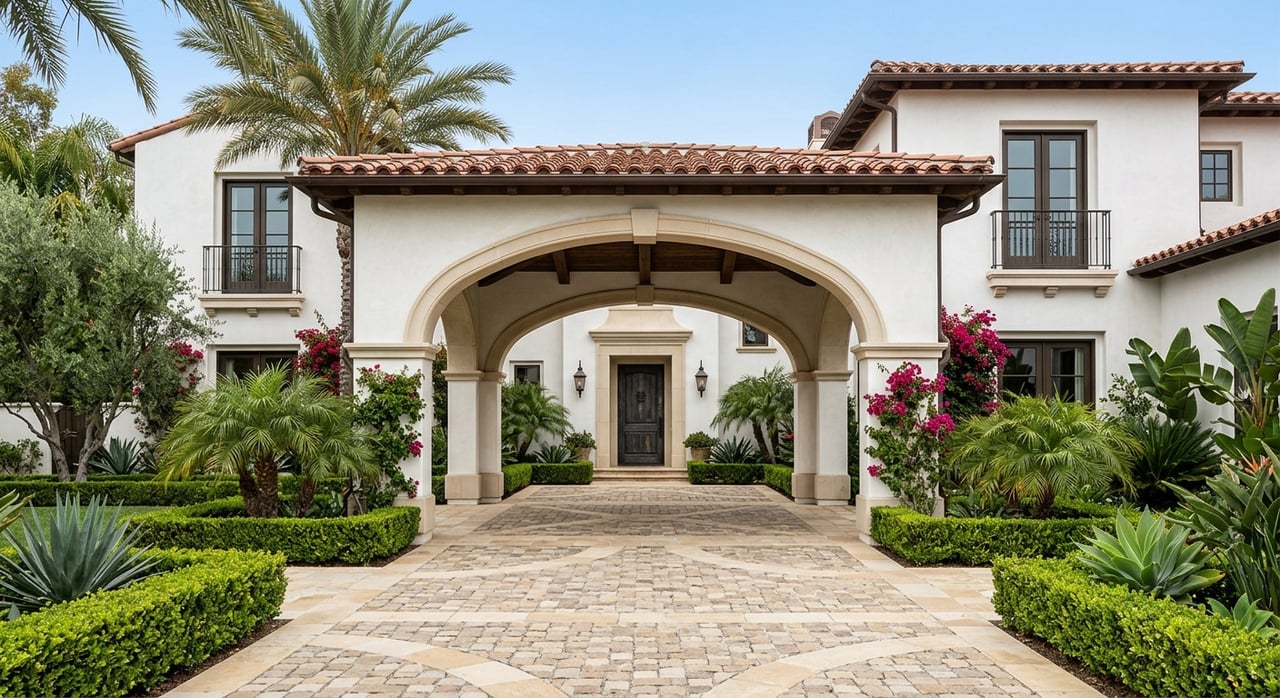
A Mediterranean estate on a prime street will not price the same way as a modern renovated home on a different lot type, even if the square footage looks similar on paper. In the luxury segment, the details move the number.
Micro-location can change the value
Coral Gables is not one uniform market. Your specific area within the city can influence buyer demand, expected days on market, and pricing power.
For instance, Realtor.com shows the Riviera neighborhood with a $2.4 million median home price and a 49-day median days on market, compared with 71 days citywide. That kind of difference is exactly why pricing should be tailored to your immediate submarket, not just the broader Coral Gables average.
If your home sits in a location with stronger demand, easier access to amenities, or a more limited supply of similar listings, that can support a stronger price. If your street or property type faces more competition, your pricing strategy may need to be sharper from day one.
Waterfront and zoning matter more than many sellers think
In Coral Gables, two homes on the same street can have very different values because of parcel-level factors. The city’s Planning and Zoning resources provide parcel-level zoning and property data, which can affect allowable use, lot potential, and redevelopment flexibility.
That is especially important for waterfront and canal properties. The city notes that Coral Gables has more than 42 miles of scenic shoreline, along with waterways, buffer zones, and mangrove protections that can influence what owners can improve or change. For luxury buyers, those details can either add value or create limits that need to be reflected in the price.
Historic character can support or limit pricing
Historic identity is another major factor in Coral Gables. The city highlights the MacFarlane Homestead Historic District and several thematic villages, including Dutch South African, Chinese, French Normandy, and Colonial villages.
That character can be a major draw for buyers who value architecture and setting. At the same time, historic context or preservation considerations can affect renovation flexibility, timelines, and future plans. When you price a luxury home with historic significance, you should account for both its appeal and any practical limits that come with it.
Read the negotiation signals clearly
The current Coral Gables market does not appear to be a fast-moving bidding-war environment. According to Redfin’s Coral Gables housing market data, homes sell in about 108 days on average, about 19% of homes have price drops, and homes sell for roughly 6% below list price. Realtor.com also describes Coral Gables as a buyer’s market, with homes selling for about 95% of list price.
Countywide conditions support that message. MIAMI Realtors reported 6.2 months of Miami-Dade single-family inventory in February 2026, which the association classifies as balanced. The countywide median percent of original list price received was 94%, and the median time to contract was 55 days.
Coral Gables has recently been softer than that countywide average. With 93 median days to contract and only 90.4% of original list price received in Q4 2025, the takeaway is simple: if you overprice your home at launch, buyers may wait you out.
Price for leverage, not for later reductions
Many sellers assume they can start high and adjust later if needed. In luxury real estate, that strategy often works against you.
When a home sits too long, buyers may wonder what is wrong with it, even when the issue is simply price. A stale listing can lose momentum, attract lower offers, and create a weaker negotiation position than a well-priced home that enters the market with clarity and confidence.
A better strategy is to price where serious buyers will see value immediately. In a market where million-dollar-plus homes are still considered a buyer’s market and typical discounts can run around 10%, according to MIAMI Realtors’ 2026 outlook, your asking price should leave room for negotiation without feeling detached from reality.
A practical pricing framework
If you want to price your Coral Gables luxury home well, use a framework that blends market data with property-specific analysis.
Define your luxury bracket
Start by identifying where your home sits relative to Miami-Dade’s current luxury thresholds. If your property is near or above the $3.5 million luxury threshold or the $10.7 million ultra-luxury threshold reported by MIAMI Realtors, your buyer pool becomes narrower and more selective.
That means pricing accuracy matters even more. The higher the price point, the less helpful broad city averages become.
Analyze the closest comps
Review recent sold properties that truly compete with your home. Focus on the homes a serious buyer would reasonably compare side by side with yours, not just homes that happen to be nearby.
Look closely at sale date, original list price, final price, days on market, and whether the property needed reductions. In this market, those details can tell you as much as the final sale number.
Adjust for your property’s specifics
Next, make disciplined adjustments for what makes your home different. That may include water access, dock features, lot shape, renovation quality, architectural pedigree, privacy, guest space, or zoning flexibility.
This is where many pricing mistakes happen. Sellers often overvalue improvements they personally love, while buyers may place more value on location, lot utility, and move-in readiness.
Test the launch price against demand
Before you list, ask a practical question: does the asking price look compelling compared with the alternatives a buyer can tour this week? If the answer is no, your home may struggle to generate early urgency.
In Coral Gables, where buyers often have time and options, the market usually rewards precision more than optimism.
Why bespoke advice matters
Luxury homes rarely fit into a formula. In Coral Gables, pricing needs to account for submarket trends, waterfront considerations, historic character, zoning, negotiation patterns, and where your property fits within the wider Miami-Dade luxury landscape.
That is why the most credible valuation is not an automated number pulled from a portal. It is a bespoke analysis built around your home, your timing, and the buyers most likely to compete for it.
If you are considering selling, working with a local team that combines neighborhood knowledge, financial rigor, and hands-on strategy can help you price with more confidence. To discuss a tailored valuation and go-to-market plan for your Coral Gables home, connect with Scott Shuffield.
FAQs
How should you price a luxury home in Coral Gables?
- You should price it using recent comparable sales, micro-location, property condition, zoning, waterfront factors, and historic considerations rather than relying on a broad average or automated estimate.
What is the luxury home threshold in Miami-Dade County?
- According to MIAMI Realtors, the 2025 single-family luxury threshold in Miami-Dade was $3.5 million, and the ultra-luxury threshold was $10.7 million.
Is Coral Gables a buyer’s market for luxury homes?
- Recent data from public portals and MIAMI Realtors suggests buyers have meaningful negotiation room, with homes often selling below asking and taking time to go under contract.
Why are Coral Gables home values different by neighborhood?
- Values can vary by submarket because of differences in demand, inventory, lot characteristics, waterfront access, architectural style, and how quickly similar homes are selling in that area.
Do historic features affect luxury home pricing in Coral Gables?
- Yes. Historic character can add buyer appeal, but preservation context and renovation limits can also affect how a home is valued and marketed.
Why is the first list price important for a Coral Gables luxury home?
- In a market with balanced inventory and selective buyers, an overpriced home can sit longer, require reductions, and lose leverage during negotiations.